
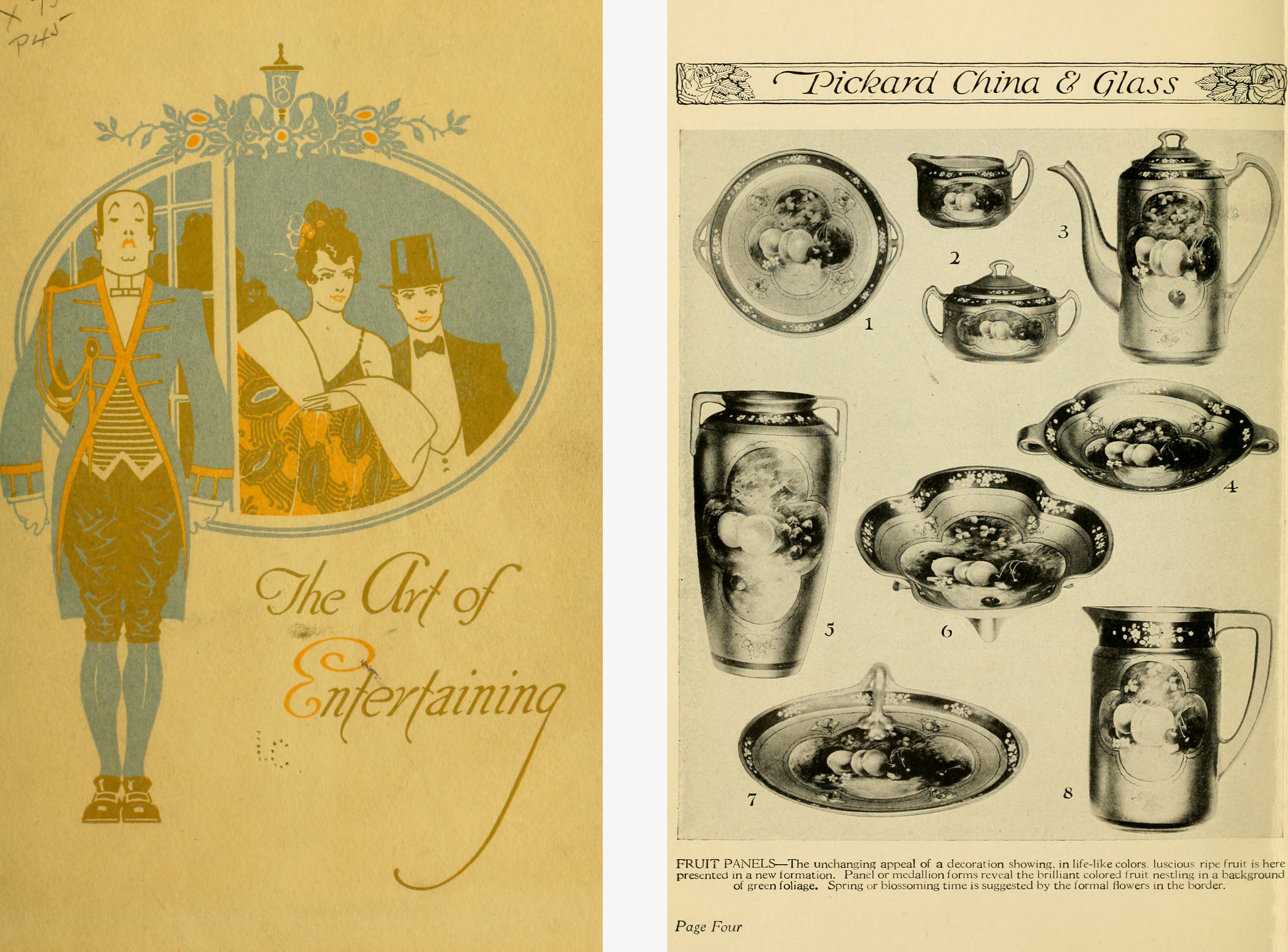
Written in 1917 for dinner hosts and homemakers, The Art of Entertaining is a time capsule of domestic etiquette in the early twentieth-century American home. Across its thirty pages, the booklet reads as equal parts help guide and advertisement, mixing prosaic tidbits—“the guest of honor or hostess is served first, then the next person, whether man or woman”—with ad copy hyping the merchandise of its publisher, Pickard China.1 The porcelain tableware of the Chicago-based manufacturer, we’re told, amounts to “more than a commercial product,” instead epitomizing the “visible expression of an ideal.”2 The guide contends that Pickard china does more than simply furnish the decor of the well-appointed home: It presents status to family and friends alike as embodied in the form of elegantly painted cups, dishes, and trays.
If the nature of these inter-domestic status signifiers feels somehow political, the guide’s authors make the reference explicit with the inclusion of several photographs of the White House State Dining Room. At the time of its publication, this association would have been purely aspirational; not until six decades later, in 1977, did an alignment between Pickard China and the highest seats of the US government become official, with a State Department commission for Pickard to supply table sets at US embassies across the world. Long before this ascension, The Art of Entertaining presciently framed its porcelain as a medium of power sited not only at the scale of domestic occasion but also at that of international politics. As the tableware of state dinners and diplomatic functions, Pickard’s wares are depicted as material artifacts of a national consciousness, furnishing the executive spaces that constitute a “front of house” for US cultural authority. Dispensing with the pretense of subtlety, The Art of Entertaining illustrates the affiliations of porcelain, power, and identity in unambiguous terms: “Pickard China is, first of all, truly American; second, it is perfect art.”3
Such claims land somewhat ironically for a company that, at the time, imported its porcelain blanks from Europe. Nevertheless, the intervening century has seen Pickard become a curious bedfellow of the loftiest echelons in US governance.4 Pickard china flies on Air Force One and is stocked on the shelves at Camp David. Successive commissions by both the Bush and Obama administrations have brought thousands of its pieces into the White House, where its serving plates embody US prominence as presented to dignitaries and delegations hosted during state dinners.5 Pickard moved its production line to the United States in the 1940s, joining a cadre of fine porcelain makers. In the time since, a decrease in demand and rising costs have seen these contemporaries offshore their production. With the 2020 closure of the Lenox Corporation’s last US-based facility, Pickard stands as the last major domestic producer of high-end porcelain.6
Pickard China’s proximity to power and the national identity it signifies make its recent acquisition by the artist Theaster Gates an intriguing development in the company’s history. Though representing a natural confluence of the artist’s mediums of practice, the Pickard purchase puts on display the conditions of “manufacturing” in the twenty-first century. Its elevation into the realm of fine art reveals how goods, cultural value, and political power combine—and unravel—in America’s postindustrial present.
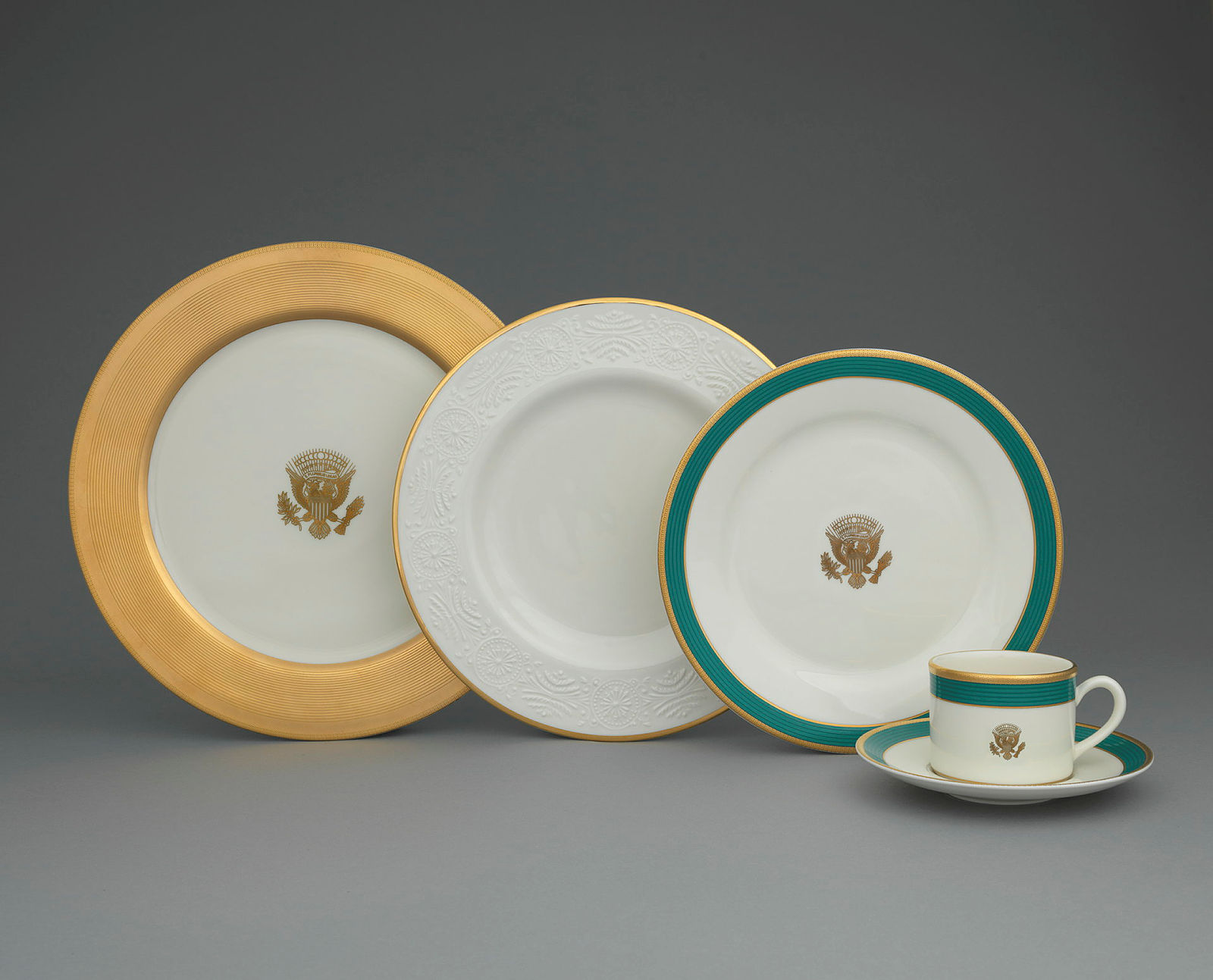
The porcelain maker joins a catalog of other Chicago-area properties under Gates’s ownership. These include a cultural center and a nonprofit arts organization refashioned from the dilapidated shells of former civic nodes on Chicago’s South Side. The rehabilitation of these structures—formerly a bank and an elementary school, respectively—involves a unique reorienting of art’s power to determine what counts as an asset and how its value is underwritten in a commodity market. In the case of the bank, now Stony Island Arts Bank, this process of assigning value to material objects unfolded literally. Gates’s sale at Art Basel’s 2013 fair in Switzerland of a hundred \$5,000 marble slabs, each a 12″ × 17″ fragment of the building’s restrooms, demonstrates the artist’s considerable dexterity in rerouting the monetary vectors of the global art marketplace. Described ironically in Gates’s words as a “bailout” subsidized by Swiss bankers, the exploitation of a porosity between selling fine art and bankrolling radical preservation has become a central thread in Gates’s practice.7 It is a strategy that seems to be again at work with Pickard China.
Although much reporting has leaned on the terminology of “a bet,”8 “a new chapter,”9 and “a test”10 to describe Gates’s purchase—all of which evoke deviation from an established trajectory—its natural continuities for an artist interested in craft, art collection, and real estate development are more intriguing as a basis for critical comparison. While allusions to Gates’s long-standing connection to ceramics are clear, the company’s significance is more than the medium of its products alone. Pickard extends the themes Gates already explores, but it also transforms how he employs preservation, particularly as it relates to the social circumstances of power around Chicago’s metropolitan region. Where previous lots Gates owns have clustered around South Chicago, in neighborhoods whose populations are nearly 90 percent Black, Pickard’s factory space is located farther north, in Antioch, Illinois, an enclave whose residents are 80 percent White. Its median household income, today rising to nearly \$105,000, far outpaces the \$44,000 average in the areas immediately surrounding Gates’s other properties.11 For Gates, art-funded preservation in these underserved communities has operated as a tool of civic empowerment and revitalization; Pickard, though, is a private business with a record of serving America’s most prominent elite. After all, it was MK Pritzker, the wife of billionaire Illinois governor JB Pritzker, who brought Gates into contact with the company in the first place.12
From Antioch to the South Side, Gates’s portfolio is underpinned at both ends by a relationship with spaces of making, albeit in distinct ways. Though a bank and elementary school are not places generally associated with material production, their location, in this case, within Chicago’s former industrial frontier, anchors them definitively to a context built around manufacturing. It is also a context confronted with the radical transformations of an economy beset by offshoring and disinvestment. Pickard China is, in the end, a factory, and therefore shares in the social and political conditions of the area’s ongoing deindustrialization. Its accession into Gates’s oeuvre indicates a recasting of the artist’s focus from the physical preservation of sites besieged by the disinvestment imposed so extensively upon the Rust Belt to the cultural preservation of labor itself. Though for Gates it constitutes a dramatic shift in scale, the modest size of the firm’s twelve-person artisan workforce pales in comparison to the vast scale of industrial manufacturing. This dichotomy is symptomatic of the broader set of values at play in arbitrating not only what gets preserved in America’s increasingly postindustrial present, but how and where such safeguarding of heritage occurs.
Preservation is an act of curating collective memory. The incorporation of Pickard into Gates’s orbit suggests that the preservation of its craft labor has occurred through an absorption into the auspices of fine art. Its salvation thus recalls the legacy of William Morris, whose championing of the nineteenth-century Arts and Crafts movement resisted the dehumanizing consequences of early industrial production. Morris’s 1861 establishment of Morris, Marshall, Faulkner & Co. redeployed the sale of fine handmade goods as a financial instrument to sustain the viability of craft, dinner plates included.13 With Pickard, however, Gates’s foray into market-supported craft conservation retains not merely porcelain, but a historical legacy of representing power.
Its continued survival makes clear the divergent forms of value cast upon the labor of manufacturing itself amid the decline of a wider industrial landscape, from South Chicago to nearby Gary, Indiana, once the site of production of a remarkable extent of America’s material culture. For instance, many thousands labored across Chicagoland in sprawling steel factories whose output provisioned an industrializing nation with materials for everything from its skyscrapers to its battleships. An artifact of industrial folklore says that by the late 1930s, the yield of US Steel’s plant at Gary Works alone surpassed that of the entire German steel industry.14 Whatever its true scale, it is clear that the region’s prodigious material output once subtended national growth. This infrastructure, both commercially and militarily, defined US political authority in the twentieth century. If Pickard’s soup bowls and saucers equipped the public-facing presentation of US power during the same period, these factories and industrial centers of its regional vicinity represented that power’s other half—put otherwise, its back of house.
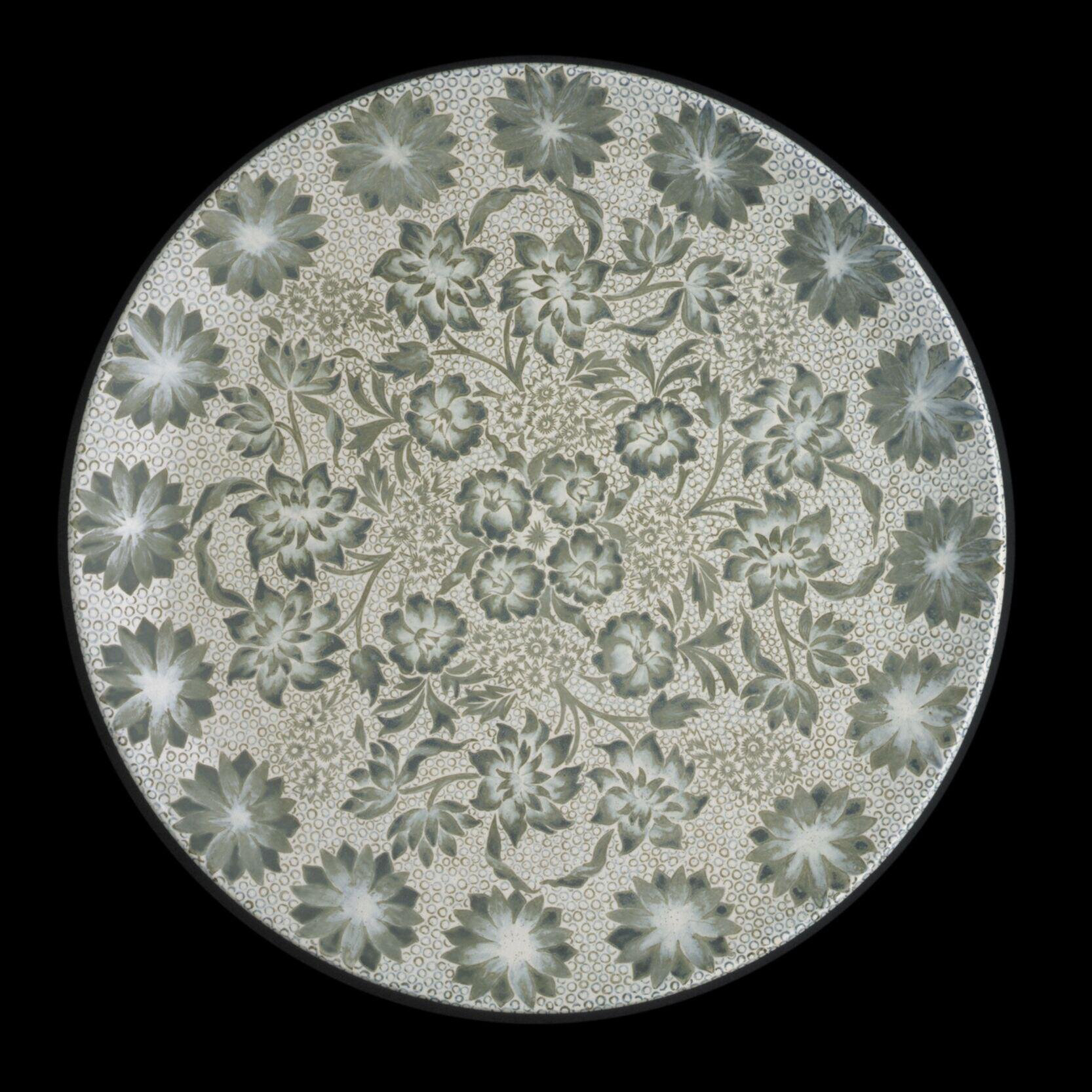
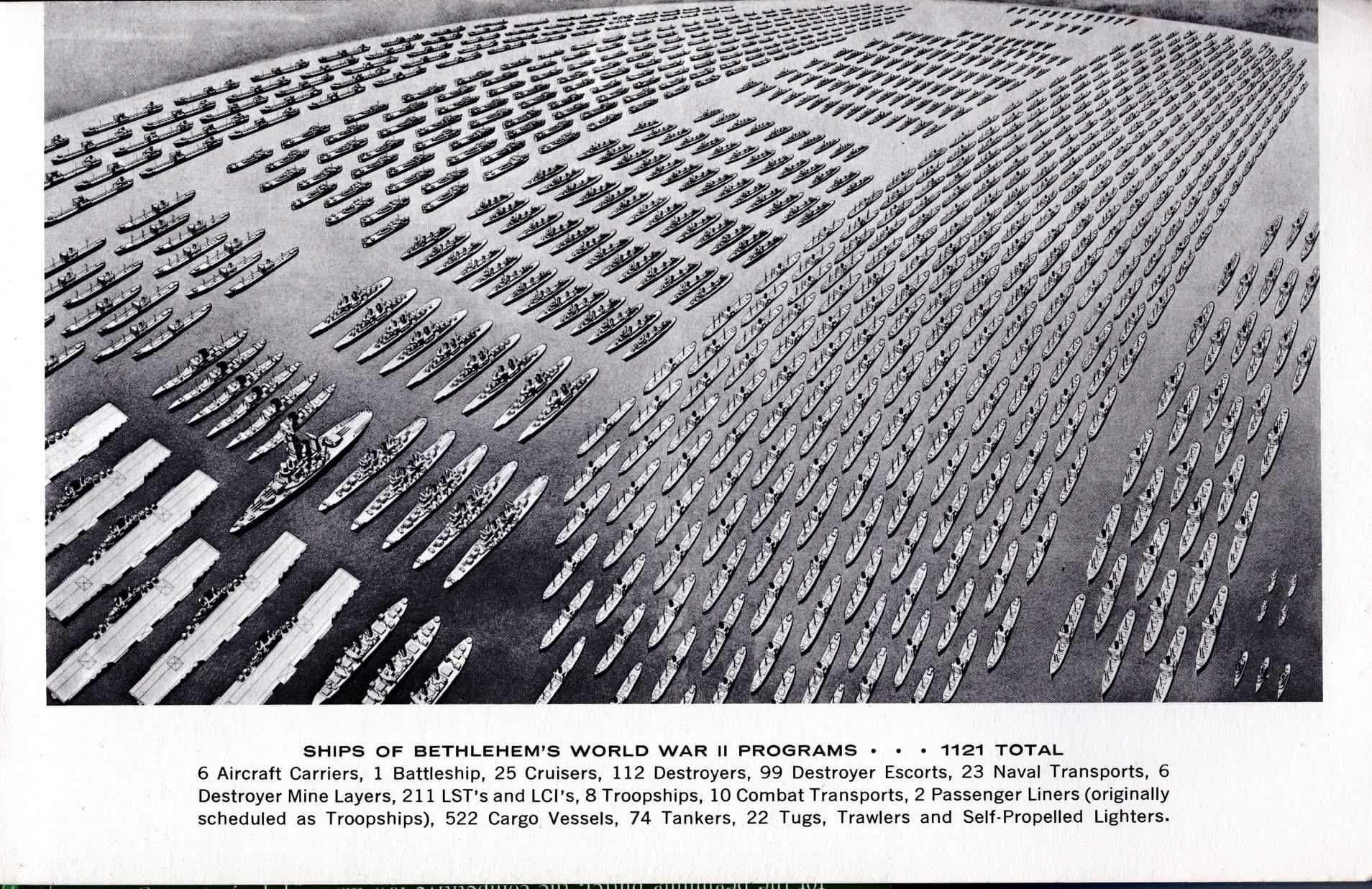
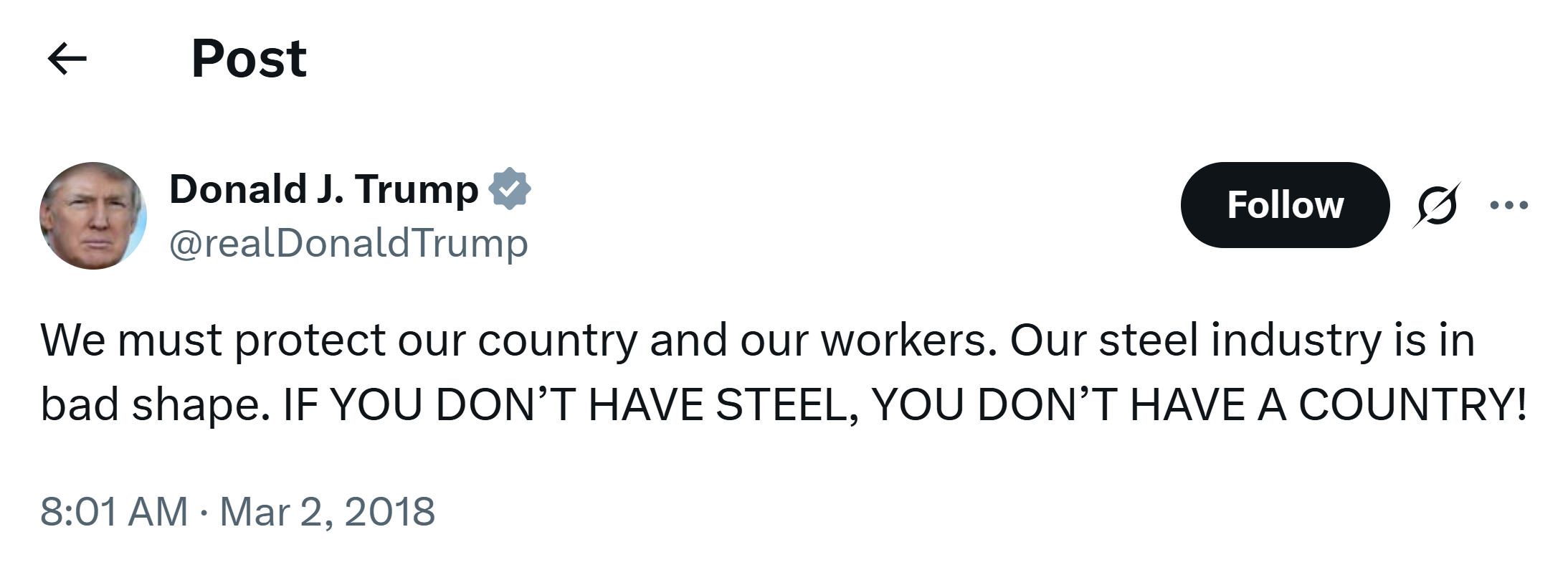
By acquiring Pickard, Gates has amassed a collection of properties whose unusual breadth captures venues situated at both ends in this furnishing of power. The adjacency between these industrial communities in the artist’s reach exhibits a profound differentiation of craft from manufacturing. Yet the superficial distinction of their associated forms of labor drastically shapes how each experiences our contemporary political economy. Pickard’s incorporation into one of America’s most respected art practices is a testament to the ability of art to reassign value to the labor of craft production. This dichotomy is invoked by Gates himself, who refers to Pickard as an opportunity to bring “artisanal manufacturing back to the fore” (emphasis mine).15 “Back” in this case pulls from a vocabulary of political terminology centered on the possibility of return—any construction of “Make X Y again” comes to mind. Such narratives arouse nostalgic visions of an imagined industrial past and are provocative across the US political spectrum. Defending a 2018 tariff package placed on steel and aluminum by way of a tweet, Donald Trump once proclaimed, “IF YOU DON’T HAVE STEEL, YOU DON’T HAVE A COUNTRY!” (caps his).16 Just the same, both the Trump and Biden administrations resisted attempts by US Steel, a prominent Chicago-area fixture of industrial slowdown, to seek foreign acquisition after decades of financial downturn.17 Turning out at a quarter of its 1970s peak, Pickard China encounters similar economic troubles.18 After no internal heir interested in taking on the family business could be found, the conservation of a porcelain company whose products adorn state dinners at the White House suggests a peculiar, yet not unimaginable, companion: “IF YOU DON’T HAVE PORCELAIN, YOU DON’T HAVE A COUNTRY!” (caps mine).
While the promises of “revitalization” loom as appealingly for Pickard China as for US Steel, what works for a boutique tableware outfit cannot save a steel plant. Pickard’s merchandise is amenable to both the financial and material dynamics of a luxury trade, capable of circulating in ways that steel cannot. As handmade objects, the assignment of its wares to the realm of craft steadies a Morris-like business case for continued operation, especially under Gates’s helm. The manufacturer’s survival builds accordingly on the utility of its goods as both heritage assets of presidential opulence and sought-after commodities. The empowerment of craft labor in an industrialized market and the high sale price of goods it requires form a perplexing tension—one summoned by Morris as he lamented his life “[spent] ministering to the swinish luxury of the rich.”19 This mutability of Pickard’s craft value and its unique position as the sole remaining domestic producer of fine porcelain products insulate it against the ravages of an economy that has outsourced much of its manufacturing needs to various productive elsewheres. Under Gates’s ownership, the company’s preservation raises important questions about whose labor is awarded cultural value, as well as about the limited capacity of an art-patronage framework to accomplish that very determination.
The contrasting outcomes of America’s postindustrialization become particularly stark as newspapers and magazines laud Pickard’s comparatively small salvation while tens of thousands of residents in nearby Gary, a majority-Black steel town, recently endured a blackout lasting two weeks.20 Just three miles from Stony Island Arts Bank, US Steel’s 1992 closure of its South Works facility constituted the final end of a workplace that once employed 15,000 workers. Current development initiatives, evangelized by Governor Pritzker and backed by \$700 million in state funding, will see the site replaced by a quantum computing campus, a substantially different afterlife than the artisanal manufacturing spearheaded by Gates.21 Though the objectives of nearly every US chief executive in the past two decades have included the restoration of a glorious and long-gone industrial heyday, little has reversed the steel industry’s decline.22 Political talking points present the grand illusion of life by purporting to verify a narrative the US public wants to believe: that US manufacturing goes on. Signs of this survival can take many forms, and the increasing implausibility of a revival of our industrial base makes the rescue of Pickard all the more tantalizing. Gates’s intervention in buying the company maintains a small operation with a specialized skill set, sustaining cultural memory in the rituals of labor it carries forward. It is an approach defined by limited scalability—art as preservation can never resuscitate a waning steel industry. Still, this purchase in the face of precisely these conditions ensures the continuation of at least one pole of US prestige through the maintenance of porcelain as a surprising, though limited, medium of power.
In The Art of Entertaining, dinnerware is portrayed as far exceeding its functional mandate as a vessel for food. The book’s advice, that “one should feel at liberty to collect and display such treasures,” hints that identity is itself constructed through the art of display.23 Via its ties to the seat of US political command, Pickard China evokes the qualities of these treasures—perhaps ones plundered from a bygone industrial past. Gates's purchase of Pickard ensures that its contributions to the furnishing of our national identity will continue to find a place in the public eye, now enshrined within the protective reclassifications of fine art. For the steelworkers and the array of communities rooted in industrial labor in and around Chicago, however, the lack of such assurance implies that our collective memory remains willfully incomplete.
-
Pickard Studios, The Art of Entertaining (Pickard Studios, 1917), TX731.P45, Library of Congress, 15. ↩
-
Pickard Studios, The Art of Entertaining, 3. ↩
-
Pickard Studios, The Art of Entertaining, 3. ↩
-
“A Brief History of Pickard,” Pickard Collectors Club, link. ↩
-
Kori Schulman, “See the New ‘Kailua Blue’ Obama State China,” Obama White House Archives, April 27, 2015, link, and Press Availability by the First Lady at the Unveiling of the George W. Bush State China, press release (The White House, Office of the First Lady, 2009), George W. Bush White House Archives, link. ↩
-
“Theaster Gates Buys Pickard China, the Last US Fine China Maker,” Dealroom, October 18, 2026, link_.
-
Theaster Gates, “Chicago Artist Theaster Gates: ‘I’m Hoping Swiss Bankers Will Bail Out My Flooded South Side Bank in the Name of Art,’” interview by Tim Adams, The Guardian, May 3, 2015, link. ↩
-
Chloe Veltman, “Theaster Gates Bets on Fine China,” NPR, October 3, 2026, link. ↩
-
“Theaster Gates Acquires Pickard China," announcement” (White Cube, 2026), link. ↩
-
“Theaster Gates Buys Pickard China, the Last US Fine China Maker,” Dealroom. ↩
-
United States Census Bureau, “Total Population” and “Hispanic or Latino, and Not Hispanic or Latino by Race,” datasets nos. P1 and P9, version 2020 Decennial Census, data.census.gov, 2020, CSV file, and United States Census Bureau, “Income in the Past 12 Months (in 2024 Inflation-Adjusted Dollars)” and “Selected Social Characteristics in the United States,” datasets nos. S1901 and DP02, version 2024 American Community Survey 5-Year Estimates, data.census.gov, 2024, CSV file. ↩
-
Veltman, “Theaster Gates Bets on Fine China.” ↩
-
The company later operated under the name Morris & Co. from 1875 until 1940. ↩
-
“Gary Works,” Center for Land Use Interpretation, 2012, link. ↩
-
Veltman, “Theaster Gates Bets on Fine China.” ↩
-
Donald Trump @realDonaldTrump, “We Must Protect Our Country and Our Workers. Our Steel Industry Is in Bad Shape. IF YOU DON’T HAVE STEEL, YOU DON’T HAVE A COUNTRY!,” Twitter, March 2, 2018, link. ↩
-
As of 2025, US Steel was successful in moving forward with an acquisition by its Japanese counterpart, Nippon Steel. However, the sale was permitted by the Trump administration only under the condition that US Steel provide the government its first-ever golden share in any corporation, securing federal supervision in the ambiguous interest of “national security.” See “White House Secures Corporate Governance Interest in the United States Steel Corporation,” Harvard Law Review 139, no. 6 (2026): 1493–1500. ↩
-
Veltman, “Theaster Gates Bets on Fine China.” ↩
-
W. R. Lethaby, Philip Webb and His Work (Oxford University Press, Humphrey Milford, 1935), bwb_T5-AGR-417, Internet Archive, 94. ↩
-
Calvin Davis, “How 99 MPH Winds Left Gary in the Dark for Nearly Two Weeks,” Capital B Gary, August 21, 2026, link. ↩
-
Maxwell Evans, “Former South Works Site Could Become Quantum Computing Campus by 2027, Officials Say,” Block Club Chicago, July 25, 2024, link; and Andrew Adams, “Quantum Business Park Coming to Chicago, Backed by $700M from State of Illinois,” Capitol News Illinois, July 26, 2024, link. ↩
-
In addition to the aforementioned actions of the Trump and Biden administrations, the Obama White House acted much the same. Of 370 antidumping trade orders it targeted at “unfair” subsidies from international manufacturers, nearly half (184) were directed toward the steel industry. A comparatively narrower steel tariff by the George W. Bush administration, implemented between 2002 and 2003, followed similar premises. See Fact Sheet: The Obama Administration’s Record on the Trade Enforcement (The White House, Office of the Press Secretary, 2017), Obama White House Archive, link; and President Announces Temporary Safeguards for Steel Industry, press release (The White House, Office of the Press Secretary, 2002), George W. Bush White House Archives, link. ↩
-
Pickard Studios, The Art of Entertaining, 5. ↩
Connor Gravelle (he/him) is an architect and educator based in New York City with a background of experience at offices in Los Angeles, London, Seoul, and New York. His work focuses on how questions of land, labor, and ecology entangle architecture in worlds beyond itself. Together with Cat Chen, he leads B39ES, a collaborative practice that works across design, research, and writing to understand and reconfigure how architecture engages questions of environment. Connor holds a Master of Architecture II with distinction from the Harvard Graduate School of Design and a BArch from the Southern California Institute of Architecture. He teaches at the Cooper Union and Pratt Institute.